

How much do you know about sign language? September is Sign Language Awareness Month, a whole month dedicated to anyone who is deaf or nonverbal. At Camp ASCCA, you will meet many campers who speak through sign language only, but that does not mean they cannot understand you.
The first person I met who signed was my bunkmate during my very first summer at Camp ASCCA in 2018. I thought the language was so fascinating because it was based solely on hand movements and facial expressions. As the famous saying goes, actions speak louder than words.
I learned a lot about sign language, thanks to many campers who were there. At the talent show, we signed “Ice Ice Baby” by Vanilla Ice. Fun fact: my sister signed “Ice Ice Baby” in a sign language class at our homeschool co-op a long time ago.
It also motivated me to learn sign language once I got home. I started taking a sign language class at my church and later joined the deaf ministry class on Sunday mornings. Now every time I go to Camp ASCCA, the counselors are surprised by how well I can communicate with nonverbal campers.
To me, one of the benefits of sign language is that you do not have to sign every word in a sentence or a question, but just enough for the deaf person to understand what you are saying. I have limited movement in my left arm, so my signing is limited too, but I try my best to imitate the hand gestures through emotions. I enjoy learning sign language so much.
Unfortunately, many people believe sign language is not a language at all. However, it is a real language and should be taught in schools. Some colleges and universities, but not all, accept sign language as a foreign language credit in high school, and some states also recognize it as a foreign language. Thankfully, Alabama is one of the states that does accept sign language as a foreign language credit.
The first deaf person named in recorded history was a painter named Quintus Pedius in 44 B.C., which is interesting because his family served the one and only Julius Caesar himself. Experts disagree on how sign language first started, but what many people seem to believe the most is that American Sign Language was invented in the early 1800s by a person named Thomas Hopkins Gallaudet.
In the late 1800s in Alabama, there was a famous deaf woman named Helen Keller. An unknown sickness during childhood caused her to lose her hearing and sight. She overcame these obstacles, graduated from college, published books, traveled the world, and gave speeches, thanks to her dedicated teacher, Anne Sullivan. You can visit Keller’s childhood home in Tuscumbia, Alabama.
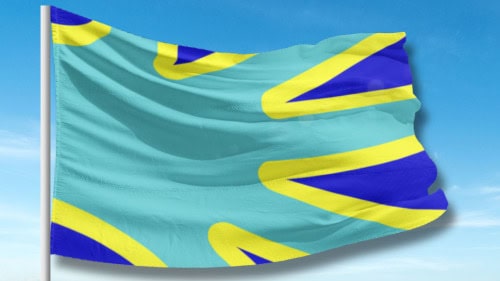
The flag for the deaf and sign language is interesting because it has a navy blue background with yellow and turquoise in the shape of a hand. There is meaning behind the colors. The navy blue represents planet Earth, humanity, and a connection to the world. It is also tied to the historical blue ribbon tradition for deafness. The turquoise represents sign language, deaf culture, pride, and unity. The yellow represents light, life, and enlightened spirit.
Did you also know that there is an International Day of Sign Languages? Not to be confused with National American Sign Language Day on April 15, the International Day of Sign Languages is celebrated around the world this month, on September 23. It was first celebrated in 2018. The purpose of it is to support and protect the linguistic identity and cultural diversity of all deaf people, according to the United Nations.
Amazingly, there are more than 300 different sign languages around the world. As for English specifically, there are three main sign languages: American Sign Language, British Sign Language, and Australian Sign Language.
About 500,000 Americans use sign language. American Sign Language is often called the third most commonly used language in the United States, after English and Spanish. What are the chances of you running into someone who speaks Spanish compared to someone who is deaf or nonverbal?
Whenever I go to Camp ASCCA, I seem to learn a few more signs here and there because I usually meet one or two campers who only sign. I love being able to communicate with them even just a little and see how it brightens up their day.
I highly recommend you and your child learn sign language and see how much you could make someone’s day and make them feel heard. You can start with something easy, like “my name is,” “thank you,” and “how are you?” I also recommend you practice in front of a mirror as well. One day your signing may be useful to help someone out. Plus, maybe you and your child will make a friend who is either deaf or nonverbal.